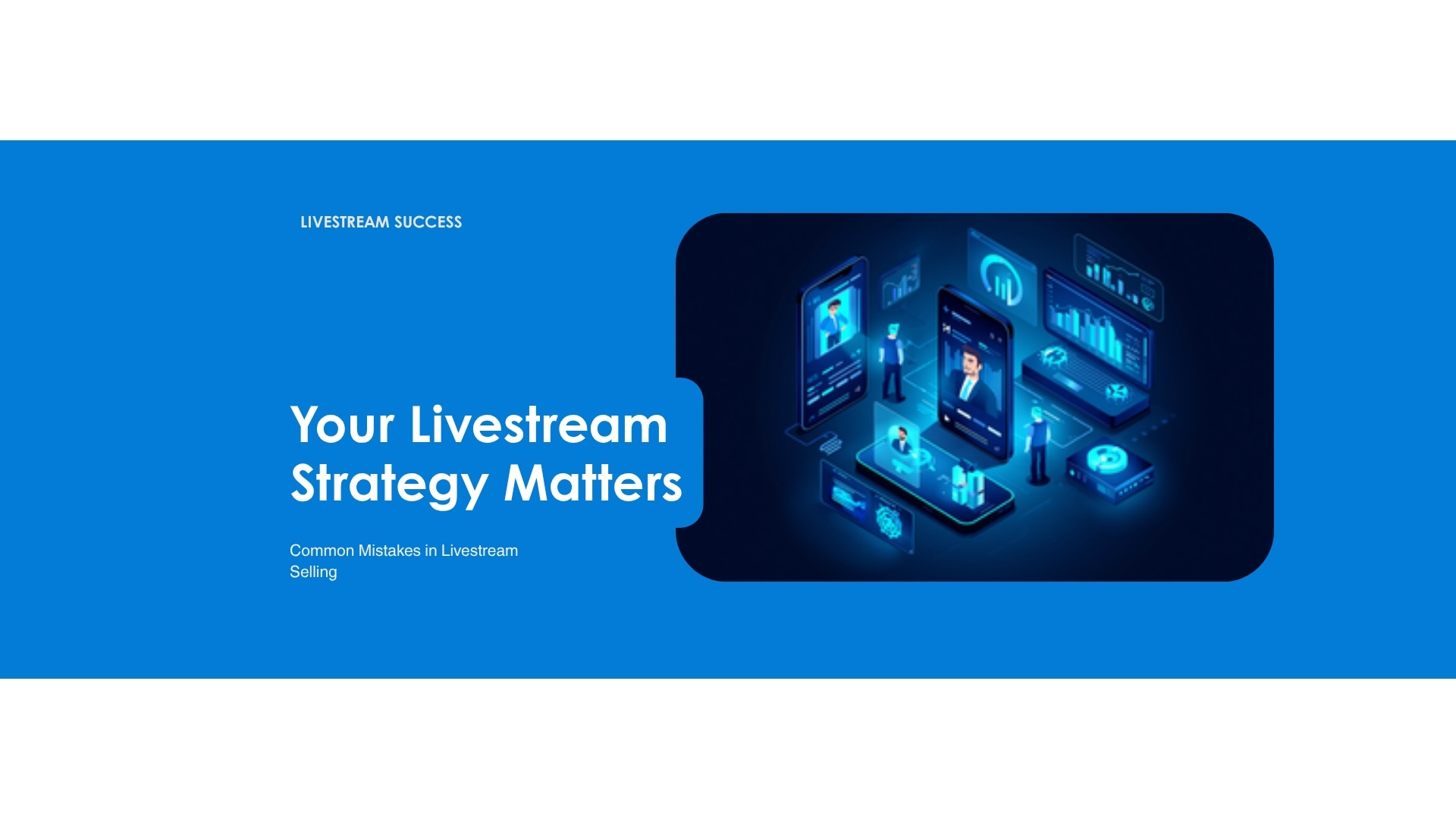
Let’s Be Honest About Livestream
Every week, a brand DMs us asking why their livestream “isn’t working anymore.” They’ve tried switching hosts. They’ve changed the schedule. They’ve even bought ring lights that cost more than their first month’s ad spend.
And almost every time, the answer isn’t the algorithm. It’s the strategy.
We’ve run over 5,000 live sessions across TikTok Shop, Shopee Live, and Tokopedia. The patterns are consistent. The brands that scale do three things differently from the brands that plateau.
Mistake #1: Treating Livestream Like a Sales Pitch
Here’s what actually happens when your host opens with “Hai semuanya! Hari ini kita punya promo spesial…” — viewers leave. They’ve heard it a thousand times. The first 30 seconds of your stream determine whether someone stays or scrolls.
What works instead: Start with a story, a question, or a demonstration. One brand we work with opens every stream by unboxing a customer return and explaining what went wrong. Their average watch time jumped from 45 seconds to 3 minutes and 20 seconds.
The difference? Curiosity beats selling. Every time.
Mistake #2: One Host, One Style, Every Day
Running the same presenter for every stream is like running the same ad creative for six months. Fatigue is real, and it kills your return viewer rate faster than anything else.
The fix: Build a roster of 3-5 hosts with different energies. We found that brands with at least 3 rotating hosts see 40% higher return viewership compared to single-host operations.
Your audience isn’t monolithic. The stay-at-home mom watching at 10 AM wants a different energy than the office worker browsing during lunch. Match your hosts to your time slots.
The sweet spot we’ve found: assign hosts based on time slots, not products. Morning hosts should be warmer and conversational. Evening hosts can be higher energy and promo-driven.
Mistake #3: Ignoring the Data Between Sessions
Every livestream produces a goldmine of data: peak viewer count, drop-off points, add-to-cart moments, conversion per product shown. Most brands look at total GMV and nothing else.
That’s like judging a restaurant only by its revenue without knowing which dishes people actually order.
Here’s what we track for every session:
- Peak concurrent viewers and the exact minute it happened (what was the host doing?)
- Drop-off curves in the first 5 minutes (where are you losing people?)
- Product-level conversion rates (which products sell on camera vs. which ones don’t?)
- Chat engagement rate (are viewers actually talking, or just watching passively?)
When you treat each stream like an A/B test, patterns emerge fast. One of our clients discovered that their best-converting product wasn’t their hero SKU — it was a Rp 49K accessory that the host kept demonstrating casually.
The Uncomfortable Truth
Livestream commerce in Indonesia isn’t hard. But it requires treating it as a system, not an event. The brands that win aren’t the ones with the fanciest studio or the most expensive host. They’re the ones who iterate, measure, and adapt every single day.
Start here: record your next 5 streams, watch the first 60 seconds of each, and ask yourself — “Would I keep watching this?” If the answer is no for more than 2, your opening strategy needs work before anything else.
What We’d Do If We Were Starting Tomorrow
If we had zero livestream infrastructure and needed to build from scratch, here’s the exact sequence:
- Week 1-2: Test 4-5 host candidates with 1-hour streams. Measure watch time, not sales.
- Week 3-4: Pick your top 3 hosts. Assign time slots. Create a shared brief template.
- Month 2: Introduce product rotation testing. Track which products convert on camera.
- Month 3: Layer in affiliate traffic to your streams. Your organic audience is your floor, not your ceiling.
The brands we’ve scaled from Rp 30M to Rp 600M/month didn’t do anything magical. They just did the basics with more discipline than their competitors.
That’s the whole secret. And honestly, it always has been.